On this page · 10 sections
- Is it worth grading One Piece cards? The short answer
- What does it cost to grade a One Piece card in 2026?
- The break-even test
- Why One Piece cards are hard to grade a 10
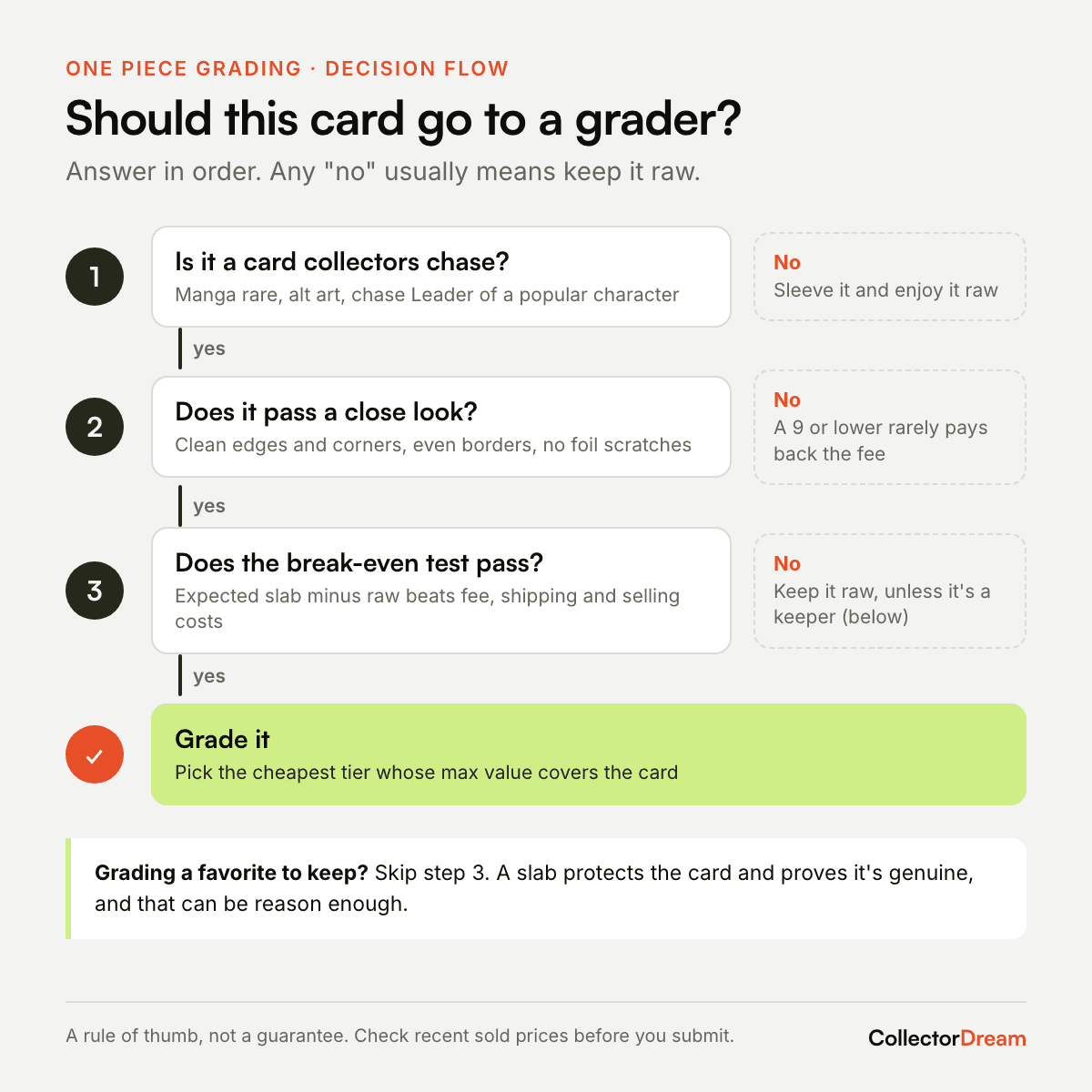
- Which One Piece cards are worth grading?
- PSA, CGC, TAG or BGS for One Piece?
- Before you send anything
- Where to go next
- Check your cards with CollectorDream
- FAQ
Updated: October 29, 2026
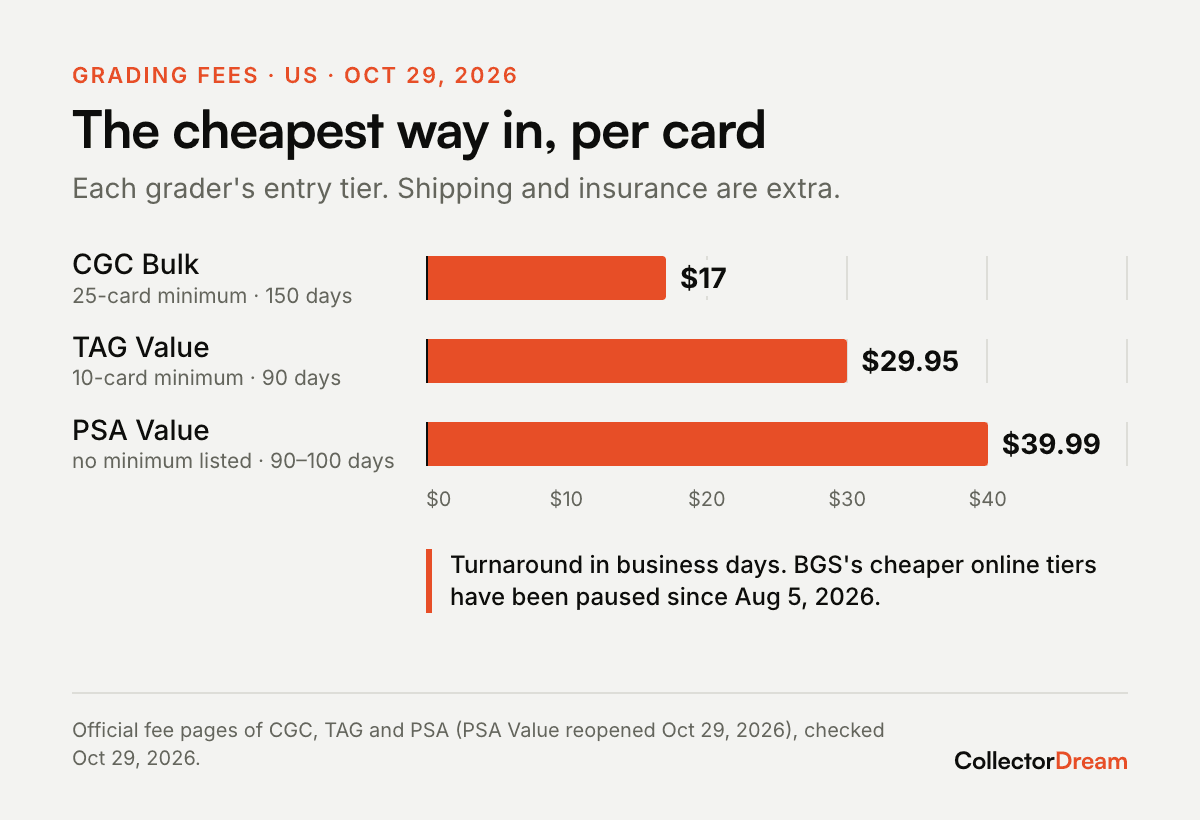
Is it worth grading One Piece cards? For most of them, no: the fee and the wait cost more than a slab adds. For a clean, in-demand manga rare or alternate art, it can be. This guide gives you the current grading fees from PSA, CGC and TAG, a simple break-even test that counts the real risk of getting a 9 instead of a 10, and a short list of which cards to send and which to keep in a sleeve.
Grader | Cheapest tier (US) | Fee per card | Max card value | Est. turnaround | Minimum order |
|---|---|---|---|---|---|
PSA | Value | $39.99 | $500 | 90–100 business days | None listed |
CGC | Bulk | $17 | $500 | 150 business days | 25 cards |
CGC | Economy | $20 | $1,000 | 90 business days | None listed |
TAG | Value | $29.95 | $250 | 90 business days | 10 cards |
TAG | Base | $39.95 | $500 | 60 business days | 5 cards |
BGS | Base / Standard | Paused online since Aug 5, 2026 |
|
|
|
Fees from the official pages, checked Oct 29, 2026: PSA pricing and PSA's Value announcement (Oct 28, 2026), CGC services and fees, TAG pricing. BGS status: ICv2, Aug 6, 2026. Fees exclude shipping and insurance.
Is it worth grading One Piece cards? The short answer
Grading is worth it when the graded card sells for clearly more than the raw card plus everything you spent to get it graded. That gap has to survive the chance of a 9, because a 9 often sells for little more than a clean raw copy.
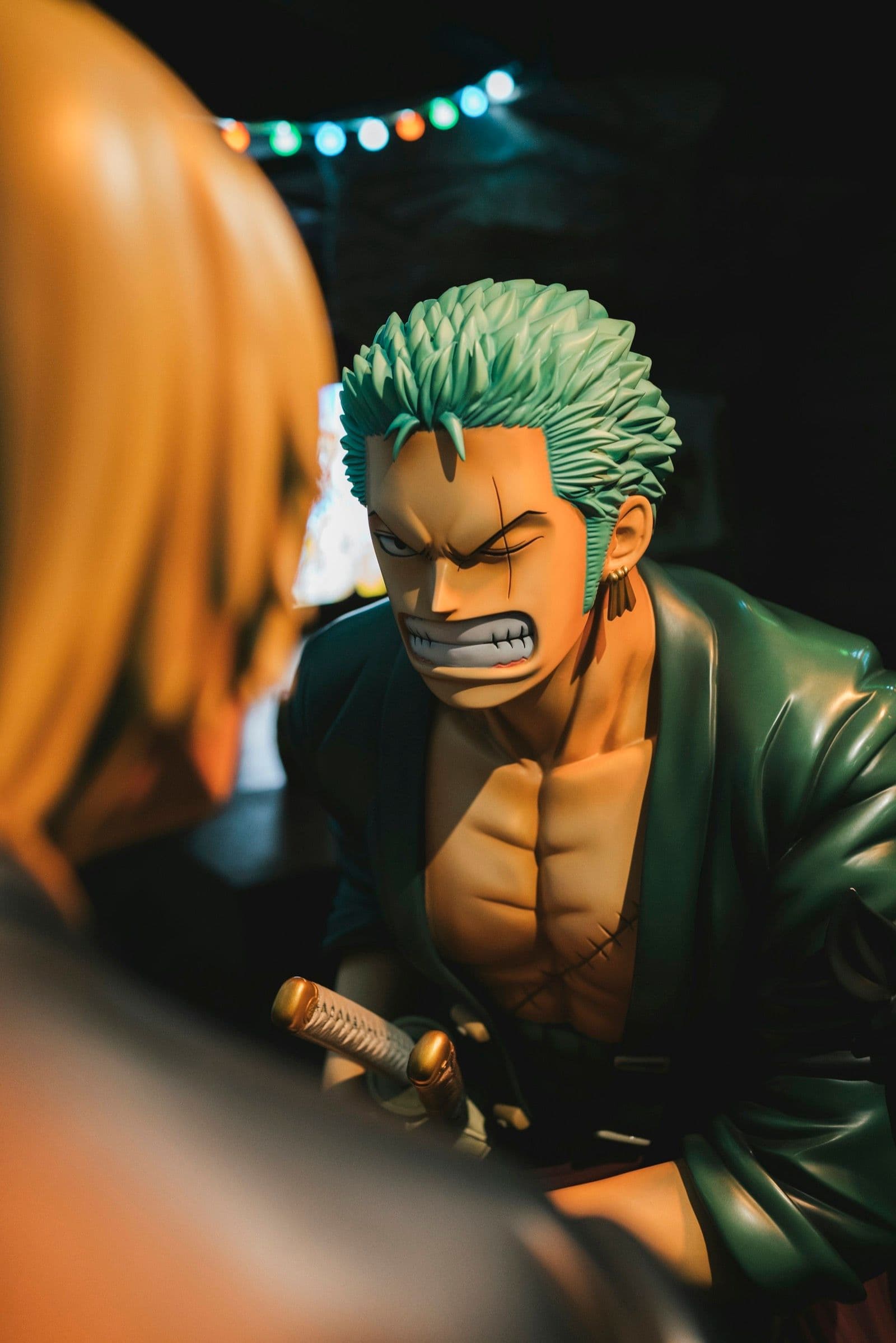
In practice that rules out most of a binder. A common Leader or a regular Super Rare rarely carries a graded premium big enough to cover even the cheapest tier. The cards that can clear the bar are the scarce, popular ones: manga rares, alternate arts and special cards of characters like Luffy, Shanks or Zoro, in condition good enough to have a real shot at a 10.
There's also the reason that has nothing to do with money. A slab protects a card you love, and it proves the card is genuine to anyone who looks at it later. If that's why you're grading, the math below matters less. Just be honest with yourself about which reason is driving you.
What does it cost to grade a One Piece card in 2026?
The cheapest tiers now start at $17 to $40 per card in the US, plus shipping both ways and insurance. Every grader charges by service level, and each level has a maximum card value, so a pricier card has to go in a pricier tier.
Grader | Tier | Fee per card | Max card value | Est. turnaround |
|---|---|---|---|---|
PSA | Value | $39.99 | $500 | 90–100 business days |
PSA | Standard | $59.99 | $1,000 | 70–80 business days |
PSA | Priority | $79.99 | $1,500 | 50–60 business days |
PSA | Express | $199 | $2,500 | 20–30 business days |
CGC | Bulk (25+ cards) | $17 | $500 | 150 business days |
CGC | Economy | $20 | $1,000 | 90 business days |
CGC | Standard | $55 | $3,000 | 10 business days |
CGC | Express | $100 | $10,000 | 5 business days |
TAG | Value (10+ cards) | $29.95 | $250 | 90 business days |
TAG | Base (5+ cards) | $39.95 | $500 | 60 business days |
TAG | Standard | $59.95 | $1,000 | 45 business days |
TAG | Priority | $79.95 | $1,500 | 30 business days |
All fees checked Oct 29, 2026 on PSA, CGC and TAG. Turnaround times are each grader's estimate, not a promise.
A few things changed this year, so older guides may be out of date:
- PSA paused its cheapest tiers on June 2, 2026 to work through a backlog of about 10 million cards (ICv2, May 29, 2026). It reopened a single Value tier at $39.99 on October 29, 2026. PSA says new Value orders are processed behind every order already at PSA, and Value Bulk is still closed (PSA, Oct 28, 2026).
- CGC raised its card fees in 2026. Its Bulk tier is $17 with a 25-card minimum (CGC).
- BGS (Beckett) paused online Base and Standard submissions on August 5, 2026 and said it expected to reopen them on September 15 (ICv2, Aug 6, 2026). Beckett's own pricing page wouldn't load for us on October 29, so we haven't listed BGS fees. Check beckett.com before you plan a BGS order.
Declare each card's value honestly. CGC says it moves a card it values higher into the right tier and bills you the difference (CGC), and every PSA and TAG tier has its own maximum value.
The break-even test
Grade a card only if its expected slab value, minus the raw value, is bigger than your fee, shipping, insurance and the extra selling costs. "Expected" is the key word: you don't know the grade before you send it, so weigh each likely grade by how likely it is.
- Look up three sold prices for the exact card, number and language: raw (near mint), the grader's 9 and the grader's 10. Use sold listings, not asking prices.
- Be honest about the chance of a 10. Check the corners, edges, surface and centering under a bright light. If you can see a flaw, a grader will too.
- Work out the expected slab value: (chance of a 10 × price of a 10) + (chance of a 9 × price of a 9).
- Subtract the raw value. What's left is the lift grading adds.
- Compare the lift with your costs: the grading fee, shipping both ways, insurance, and the extra marketplace fees on a higher sale price.
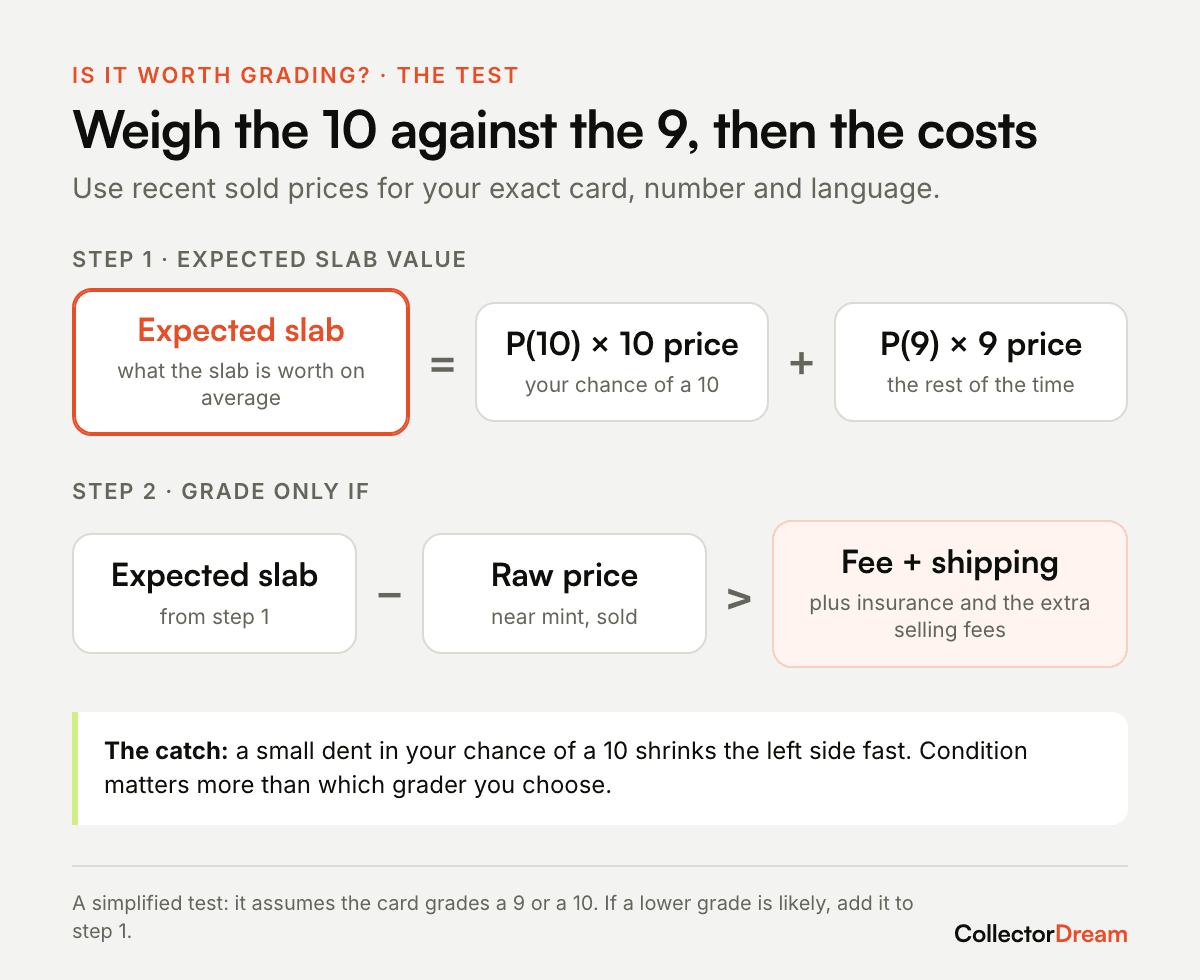
A worked example with made-up numbers. These aren't real prices for any card; they only show how the test behaves. Say a card sells for $100 raw, $130 as a 9 and $300 as a 10, and you send it to PSA Value at $39.99.
- If you rate its chance of a 10 at 40%, the expected slab value is 0.4 × $300 + 0.6 × $130 = $198. The lift is $98, which leaves about $58 after the fee, before shipping, insurance and selling costs. Probably worth it.
- If the card has a soft corner and you rate its chance of a 10 at 10%, the expected slab value drops to 0.1 × $300 + 0.9 × $130 = $147. The lift is $47, or about $7 after the fee. Shipping alone can wipe that out.
Same card, same fees: the only thing that changed is its condition. That's why the honest look in step 2 matters more than which grader you pick. The same test works for any game, including the Pokémon chase cards in our Delta Reign chase card guide.
Why One Piece cards are hard to grade a 10
One Piece cards tend to grade lower than collectors expect, mostly because of their borders and centering. A few things to look for before you decide:
- Colored borders. Many One Piece cards have dark or colored edges, so even a little white wear on an edge or corner stands out (Misprint, Jun 20, 2026).
- Centering. Compare the border on the left and right, then top and bottom. One side visibly wider than the other is the most common reason a clean-looking card misses a 10.
- Print lines and foil scratches. Tilt foil cards under a light. Thin lines or scuffs in the foil count against the surface grade.
- Pack handling. Cards pulled and stacked without sleeves pick up edge wear quickly. Sleeve anything you might grade the moment it comes out of the pack.
None of this means you shouldn't grade One Piece cards. It means your realistic chance of a 10 is lower than you think, and that number drives the whole test above.
Which One Piece cards are worth grading?
The best candidates are cards with a big gap between raw and graded prices that are also in top condition. Usually that means:
- Manga rares and other scarce special arts of popular characters, which are the cards where graded copies sell well above raw.
- Alternate-art Leaders and chase alt arts that collectors keep chasing long after release.
- Cards you'd keep anyway, where a slab protects the card and proves it's genuine.
Usually not worth it:
- Cards where a 10 sells for only a little more than raw. Even a $17 fee plus shipping eats a small gap.
- Cards with visible flaws. A 9 or lower rarely pays back the cost.
- Cards facing a reprint. If a card is being reprinted, graded copies of the original printing don't always hold their price, so check what's coming before you send.
If you're new to One Piece rarities, our upcoming One Piece rarity guide will walk through every tier, from Common to manga rare.
PSA, CGC, TAG or BGS for One Piece?
All four grade One Piece cards, and the right choice depends on what you want from the slab. The main differences right now are price, wait time and how buyers see each label.
- PSA is the biggest grader by volume: it says it graded 59 million items in the past three years alone (PSA, Oct 28, 2026). Its Value tier is back at $39.99, but new orders join the end of a long queue.
- CGC has the cheapest entry fee if you can fill a 25-card Bulk order, and the fastest mid-priced tiers, such as Standard at 10 business days for $55.
- TAG grades One Piece cards in English and Japanese, as long as they're standard poker size, and its Standard tier and above add a 1,000-point score. It doesn't accept miscut cards or test prints (TAG help center, Jul 2, 2026).
- BGS is known for subgrades, but its cheaper online tiers have been paused since August 5, 2026. Check its status first.
We'll compare the four in detail in our upcoming PSA vs CGC vs TAG vs BGS guide. CollectorDream makes its own app, so weigh our take accordingly.
Before you send anything
A little prep keeps a good card from coming back worse than it went in:
- Clean your hands, not the card. Don't wipe or press a card's surface.
- Use a fresh penny sleeve and a semi-rigid holder (or whatever your grader asks for). Don't send holders you want back: CGC, for one, says it doesn't return sleeves or card savers (CGC).
- Fill in the declared value honestly, using recent sold prices for the grade you expect.
- Insure the package for what the cards are worth, and keep the tracking number.
- Log every card you send, with photos of the front and back, so you can check them when they come back.
If you're still building your first collection, the protection steps in our beginner's guide to collecting trading cards are the right place to start.
Where to go next
- How to Start Collecting Trading Cards in 2026 (protecting cards from pack to binder)
- Pokémon Card Rarities Explained (if you collect Pokémon too, which tiers are worth a closer look)
- Delta Reign Chase Cards & Pull Rates (chase cards and the odds of pulling them, for Pokémon collectors)
Check your cards with CollectorDream
With CollectorDream you can scan a card, see its recent sold prices raw and graded, and keep track of what you've sent off to a grader. The app is out now on iOS: download CollectorDream on the App Store, and follow Alec's daily openings on YouTube, TikTok and Instagram.
FAQ
How much does it cost to grade a One Piece card?
In the US, the cheapest tiers on October 29, 2026 were CGC Bulk at $17 (25 cards minimum), TAG Value at $29.95 (10 cards minimum) and PSA Value at $39.99, plus shipping and insurance. Faster tiers cost more.
Can TAG grade One Piece cards?
Yes. TAG grades English and Japanese One Piece cards that are standard poker size. It doesn't accept miscut cards or test prints.
Is PSA or CGC better for One Piece cards?
PSA is the biggest grader by volume, and CGC is cheaper at the entry level and faster in its mid-priced tiers. If you plan to keep the card, either is fine; if you plan to sell, check which label sells better for that exact card.
How long does PSA grading take right now?
PSA's own estimates on October 29, 2026 were 90–100 business days for Value, 70–80 for Standard and 50–60 for Priority. They're estimates, and PSA says new Value orders are processed after the orders it already has.
Should I grade Japanese One Piece cards?
The same test applies: compare sold prices for the graded and raw Japanese card. PSA, CGC and TAG all accept Japanese One Piece cards, and prices for Japanese and English versions of the same card can be very different.
Alec Nguyen
Founder, CollectorDream
Scan a card, see its rarity and value
The CollectorDream app reads the card for you. Now on the App Store.
Download on iOS (opens the App Store)